TP-Link Improves Wi-Fi Reliability and Long-Range Speeds With the Archer 8
TP-Link's Wi-Fi 8 assault begins this fall

May 28, 2026 | Share 


News
TP-Link teases the Archer 8 Wi-Fi 8 router. Image provided by TP-Link
Just as homes and businesses begin to embrace Wi-Fi 7, TP-Link revealed the Archer 8, a standalone router based on the upcoming Wi-Fi 8 (802.11bn) specification. The router will arrive in October 2026, followed by additional Wi-Fi 8 products from TP-Link throughout 2027.
Router manufacturers are jumping the gun—again
TP-Link’s announcement is no surprise. Router manufacturers typically launch products before wireless specifications are finalized. For example, the IEEE didn’t publish its final version of the Wi-Fi 7 standard (802.11be) until July 2025, although the Wi-Fi Alliance launched its Wi-Fi CERTIFIED 7 program in January 2024. That program allowed ASUS, NETGEAR, TP-Link, and others to release Wi-Fi 7 products as early as Q1 2024.
In January, Wi-Fi 8 made its grand appearance during the CES 2026 show in Las Vegas. TP-Link even demonstrated a live Wi-Fi 8 connection in a private room. Now its first Wi-Fi 8 router lands this October.
“For years, Wi-Fi innovation has been measured by peak theoretical speeds,” says Jeff Barney, President of TP-Link Systems Inc., in a press release sent to HighSpeedInternet.com. “But what users actually care about is consistency. Archer 8 is designed to deliver exactly that: lower latency, better performance under interference, and more stable connectivity in real-world environments.”
Let’s take a glance at how Wi-Fi 8 will improve your wireless connections.

Do you have the internet speeds for Wi-Fi 8?
The Wi-Fi 7 products we’ve tested support internet connections of up to 9.4Gbps—Wi-Fi 8 will likely do the same. If your internet feels slower than a slug, enter your zip code to find a provider that can meet those lightning-fast Wi-Fi 8 speeds.
Wi-Fi 8 is about stability
While we boast about the improved speeds of Wi-Fi 7 over Wi-Fi 6E and older, the new specification tackles some of the annoyances that make Wi-Fi inferior to wired connections: reliability and latency.
However, Wi-Fi 8 doesn’t increase the max throughput, the number of spatial streams, the current fastest modulation (4096-QAM), or the number of channels we can use on each band—it’s not the huge transition we saw between Wi-Fi 6 and Wi-Fi 7. Think of Wi-Fi 8 as a performance improvement of Wi-Fi 7 without drastically changing the core specification.
Enhanced long-range speeds
Since radio waves degrade over distance, so do speeds. When the data rate drops to zero, devices normally disconnect from Wi-Fi even if it still detects a signal.
Wi-Fi 8 aims to provide more speed at a longer range than what Wi-Fi 7 and older standards currently allow. With Wi-Fi 7, we can bench 900Mbps using the 6 GHz connection while standing at our marker across the street—Wi-Fi 8 should give us even more speed in that spot without us having to inject more speed into the network (like upgrading to a faster internet plan).
According to TP-Link’s press release, it recorded up to 33% higher throughput in initial tests by utilizing the enhanced modulation and coding improvements of Wi-Fi 8.
Consistent speeds
Wi-Fi divides data into multiple streams, which your devices piece back together and use. With Wi-Fi 7 and older, streams broadcast at the same rate (speed), so if one stream broadcasts at a slow rate, so do all the others. Wi-Fi 8 allows for unequal rates—each stream now broadcasts at its fastest rate possible, increasing throughput.
TP-Link’s initial testing showed up to 24% higher throughput by using these unequal stream rates.
Less neighboring network interference
While Wi-Fi 6 and Wi-Fi 7 attempt to reduce interference from neighboring Wi-Fi networks, Wi-Fi 8 adds “smarter” interference mitigation using secondary channel access, coordinated beamforming, coordinated transmissions, and more. The combination helps keep your Wi-Fi “bubble” restrained and not invade neighboring networks.
Smoother speed declines and improved reliability
In addition to the three highlights mentioned above, Wi-FI 8 also provides several more benefits to improve your wireless connections. They include:
- Smoother speed declines as you move away from the router
- Improved network performance using smarter channel assignments based on per-device bandwidth use
- Reduced network congestion using alternative channels when the main ones are busy
- Improved reliability by maximizing the uplink transmit power
- Improved seamless roaming
Even more Wi-Fi 8 data from TP-Link
TP-Link provided a few extra tidbits of data in its press release to give us some insight into how Wi-Fi 8 and supporting routers will improve connectivity. Take a look:
- Up to 15% throughput improvement between multiple access points (think mesh systems and paired routers)
- Up to 30% signal-performance improvement in multi-floor environments for single-device connections; 10 to 20% improvement in multi-device environments (via TP-Link’s antenna architecture and AI-assisted optimization)
- Advanced RF optimization to support stronger, better reliability
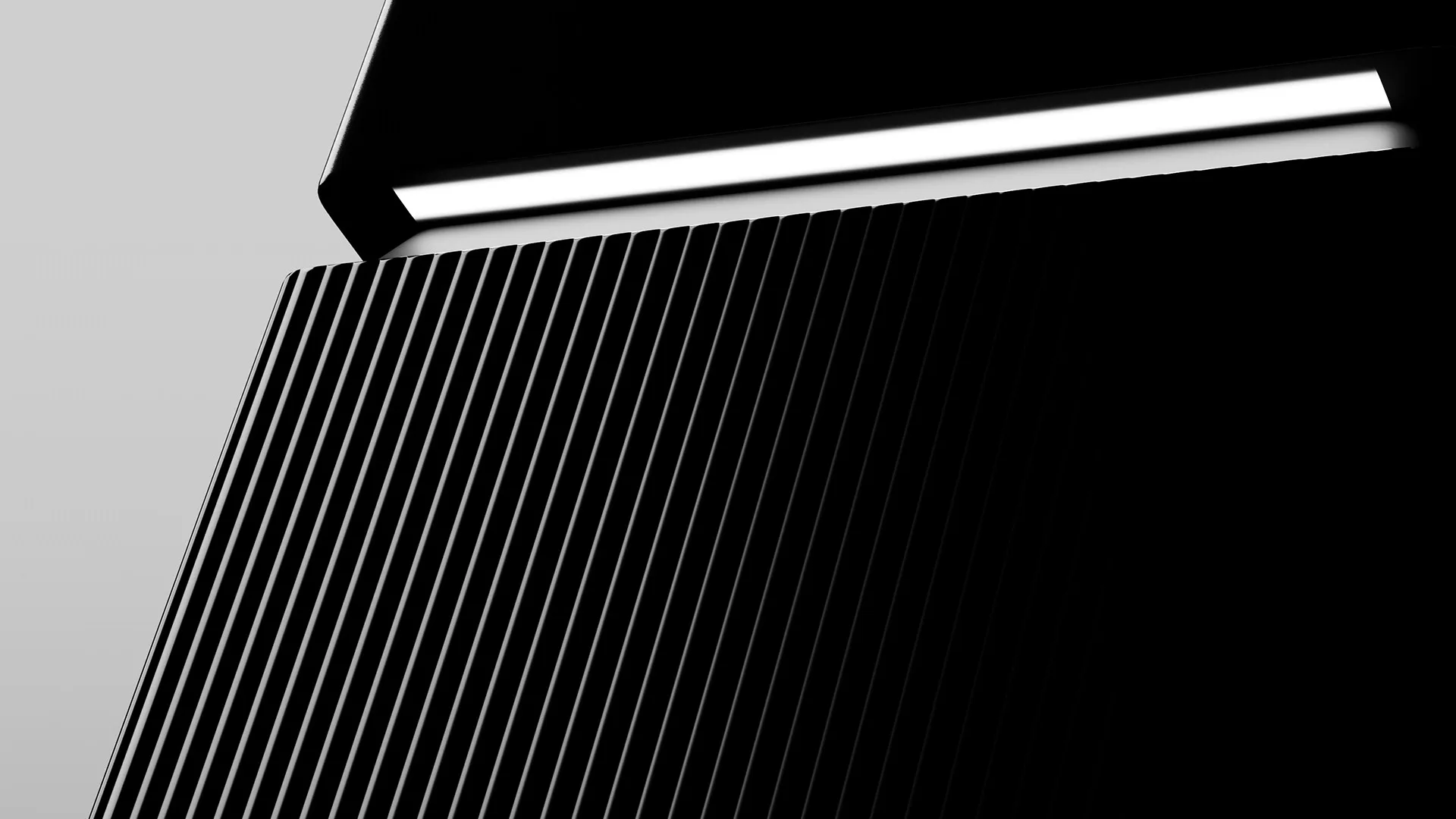
TP-Link’s Archer 8 router has a light bar on the front. Image provided by TP-Link
TP-Link gets mysterious with its Archer 8
There are no released Archer 8 router specifications as of this writing. The few product shots we received merely tease the design, nothing more. We’re getting a rectangular Xbox Series X vibe with some additional lighting on the front. And like with TP-Link’s current family of Wi-Fi 7 products, the non-budget Wi-Fi 8 routers should have three bands and a pair of 10 Gigabit Ethernet ports.
“Designed with a minimalist architectural form, Archer 8 balances refined aesthetics with performance-focused engineering,” teases the press release. “Details including micro ridge texturing, precision contours, and a soft front-facing emissive light create a tactile and visual experience intended to feel sophisticated, modern, and distinctly premium.”
Should you get a Wi-Fi 8 router this fall?
You can invest in TP-Link’s Archer 8 router or other competing products from ASUS and NETGEAR this fall, but they’ll use a draft version of Wi-Fi 8, not the finalized one arriving in 2028. And while Broadcom, Qualcomm, and other chip makers have chipsets that support Wi-Fi 8, the availability of consumer devices like phones, tablets, and laptops is unknown at this time.
Finally, TP-Link’s planned Wi-Fi 8 rollout
TP-Link’s Archer 8 router isn’t its only Wi-Fi 8 product in the works. Here’s what the company plans to launch in 2026 and 2027:
| Q4 2026 | Q1 2027 | Q2 2027 |
|---|---|---|
Note that the Deco 8 name reflects a rebranding of TP-Link’s mesh systems to be more consumer-friendly. Customers will still see specific designations on packaging and product listings for specification clarity.
That said, TP-Link separates its current Wi-Fi 7 mesh systems into three tiers:
- Deco 7
- Deco 7 Pro
- Deco 7 Elite
We expect the upcoming Wi-Fi 8 systems to use the same naming scheme.
Author - Kevin Parrish
Kevin Parrish has more than a decade of experience working as a writer, editor, and product tester. He began writing about computer hardware and soon branched out to other devices and services such as networking equipment, phones and tablets, game consoles, and other internet-connected devices. His work has appeared in Tom’s Hardware, Tom's Guide, Maximum PC, Digital Trends, Android Authority, How-To Geek, Lifewire, and others. At HighSpeedInternet.com, he focuses on network equipment testing and review.
Editor - Jessica Brooksby
Jessica loves bringing her passion for the written word and her love of tech into one space at HighSpeedInternet.com. She works with the team’s writers to revise strong, user-focused content so every reader can find the tech that works for them. Jessica has a bachelor’s degree in English from Utah Valley University and seven years of creative and editorial experience. Outside of work, she spends her time gaming, reading, painting, and buying an excessive amount of Legend of Zelda merchandise.
Related Posts