Why T-Satellite May Not Be Worth Your Time
I was OK spending $10, but gave up after two hours with AI chatbots

May 12, 2026 | Share 


News
T-Mobile has quietly made it possible for customers of other phone carriers to sign up online for its T-Satellite service, according to the folks at PCMag.
Unfortunately, I was unable to sign up for the paid version despite spending nearly two hours with a convoluted chain of AI chatbots and customer service agents in different T-Mobile departments. I wasn’t able to sign up for the free 911 service either because of a registration error the bots weren’t able to resolve.
The final chatbot told me I had to call in, and that’s when I abandoned the project.
If I hadn’t been trying to sign up for this article, I would have abandoned it long before.
If I happen to be struck by a natural disaster in the near future, though, that’s a choice I may regret.

Looking for reliable home internet service?
Enter your zip to see local options.
How T-Satellite works
T-Satellite is a partnership between T-Mobile and Starlink that promises to end dead zones forever. It kicks in when you have no other cell phone service.
You get a signal by connecting to the nearest low-Earth orbit satellite overhead, as long as you aren’t too close to obstructions.
When the service was first introduced, it was available for only SMS text messaging. At the time, it was available at no charge to anyone on any carrier. I get service through a tiny MVNO, but that deal allowed me to test T-Satellite in Utah’s backcountry.
About a year later, in January 2026, T-Mobile announced that the service would work on 34 mobile apps, not just text messaging. The list includes the following:
- WhatsApp for voice calls
- com
- AllTrails
- AccuWeather
- Google Maps
- Overwatch x Rescue
- OnX
- T-Life
A few months later, the service changed its website to say the service would work on roaming plans in New Zealand and Canada.
The service is free if you have a T-Mobile Experience Beyond plan, but it’s $10 per month for other T-Mobile customers and anyone who gets their mobile coverage from another carrier, like AT&T or Verizon.
Searching for a new mobile phone carrier?
Enter your zip to start shopping today.
Who needs T-Mobile’s satellite offering
As it turns out, not many people need the service. At least, they don’t need it very often. CEO Srini Gopalan told investors during an earnings call toward the end of March that the company was “seeing a lot less usage than we were originally thinking.”
Most of the usage had been in national parks, he said. That makes sense, considering how far you have to go in most of the U.S. to get away from cell phone coverage.
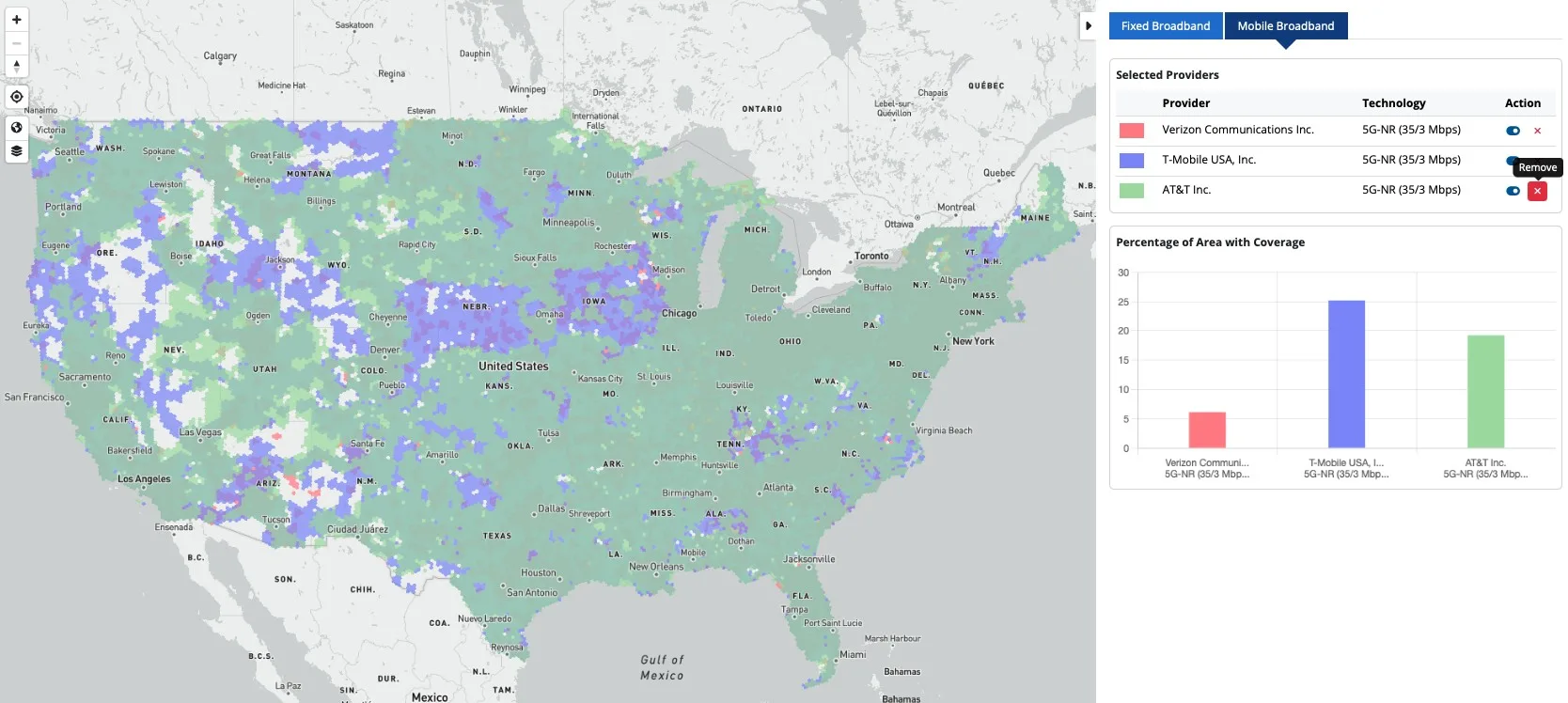
The latest move to (allegedly) let customers from other carriers sign up for T-Mobile’s satellite service could be a way to fix that.
My take: T-Satellite may be worth $10, but not worth my wasted time
When I originally tested T-Satellite, it was nice to know I could send text messages from the middle of nowhere. Now, with data support for apps, it would be cool to be able to make a voice call or text my location to anyone, from anywhere in the world.
The fact is, though, that dead zones are rare. T-Satellite isn’t very useful day to day. And even in natural disasters, all three big networks use techniques like network slicing and AI-network management to repair and reroute 5G traffic faster than ever.
I invested in a National Parks Pass this year, so I may try to sign up again before I head out into the boonies. Until then, though, I don’t have time to wait for T-Mobile to get its house in order, just in case I need to text a friend in the aftermath of an earthquake. I’ll take my chances.
In the meantime, here are my top picks for portable internet, and here’s my guide on staying connected in a natural disaster. If it’s just your mobile network that’s down, check out my colleague’s guide on what to do if you don’t have phone service.
Author - Chili Palmer
Chili Palmer covers home tech services, with a special focus on understanding what families need and how they can stay connected on a budget. She handles internet access and affordability, breaking news, mobile services, and consumer trends. Chili’s work as a writer, reporter, and editor has appeared in publications including Telecompetitor, Utah Business, Idaho Business Review, Benton Institute for Broadband & Society, and Switchful.com.
Editor - Jessica Brooksby
Jessica loves bringing her passion for the written word and her love of tech into one space at HighSpeedInternet.com. She works with the team’s writers to revise strong, user-focused content so every reader can find the tech that works for them. Jessica has a bachelor’s degree in English from Utah Valley University and seven years of creative and editorial experience. Outside of work, she spends her time gaming, reading, painting, and buying an excessive amount of Legend of Zelda merchandise.
Related Posts