79% of Americans Say the Internet Is Now Their Primary Classroom for Black History
As digital platforms expand access to culture and education, Black History Month is having a moment of national online engagement

Feb 18, 2026 | Share 


Data and Research, Featured, Trends
Black History Month has long been a time to honor the resilience, achievements, and cultural contributions of Black Americans. But new data shows that the way people learn and engage each February has evolved significantly.

While Black History Month remains a celebration rooted in community and tradition, the findings suggest it has also become a national moment of reflection. With a majority of respondents identifying as White, the data points to a broader pattern of intentional learning, highlighting how the internet has helped once-overlooked stories become more visible within the collective American conversation.
How Americans discover Black history online
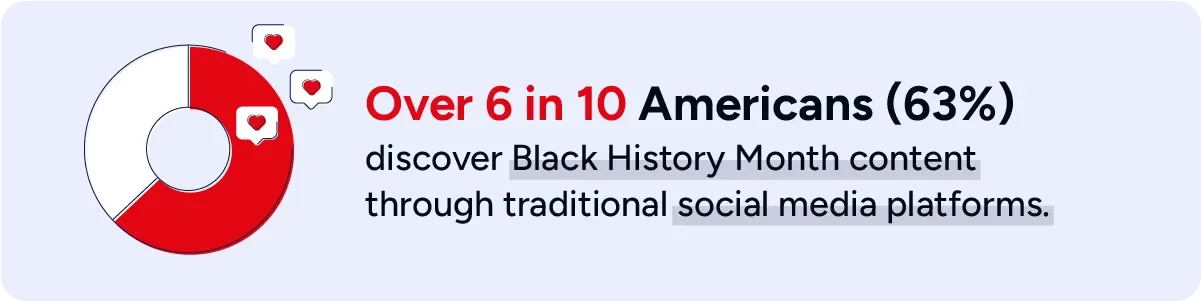
Digital discovery is happening across multiple platforms. When asked where they often encounter Black History Month content, 63% of respondents said traditional social media platforms; 59% cited streaming services; and 53% indicated short-form videos.
From documentaries on Netflix and Hulu to educator-driven explainers on TikTok and YouTube, the internet has created new pathways for cultural learning.
Streaming platforms play a major role, with nearly 60% of viewers turning to films, historical series, and documentaries as part of their engagement.
Rather than relying solely on textbooks or televised specials, Americans now encounter cultural storytelling organically through home pages, curated recommendations, shared posts, and creator-led content.
The impact of digital access
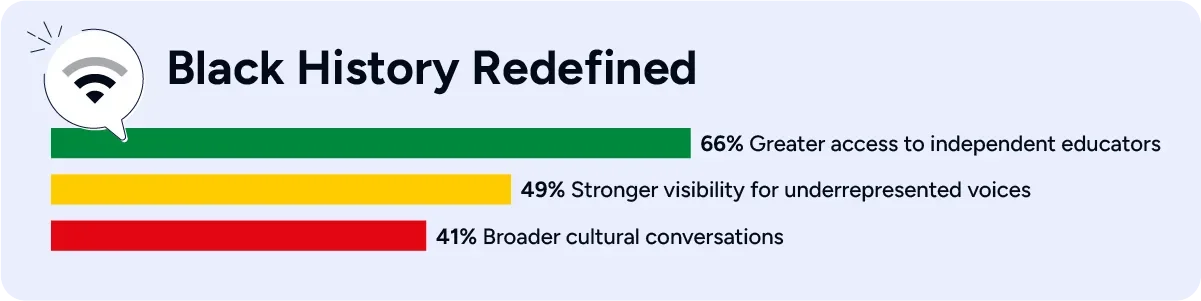
Beyond visibility, respondents say the internet has changed how they engage with Black history. Most respondents (66%) say the biggest benefit is increased access, allowing them to connect directly with independent creators and historians. Nearly half (49%) say online platforms have increased visibility of black voices and cultural contributions not typically covered in traditional media. Another 41% say the internet has helped shape conversations, making those discussions more accessible and widespread.
For many Americans, the digital landscape has transformed passive observation into active exploration, from watching documentaries to following educators, sharing content, and supporting Black-owned businesses.
Internet cost and reliability remain an issue
While 41% of Americans say cost and technical limitations do not restrict their ability to explore culture or educational content online, a significant share still face barriers.
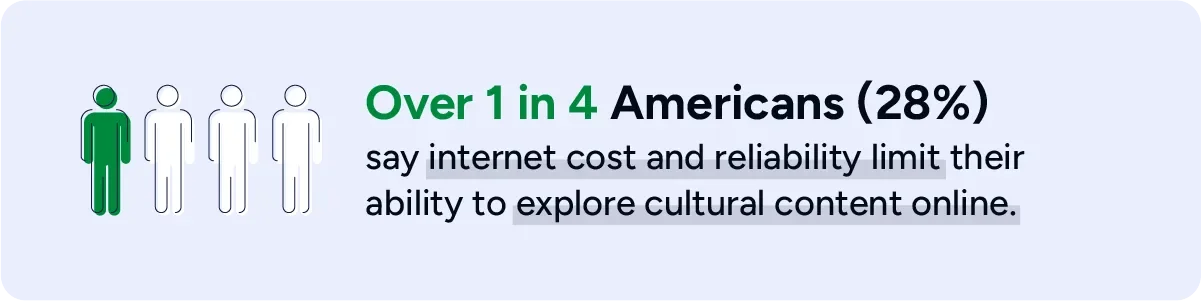
For some, that may mean settling for lower-quality video, skipping content behind subscription paywalls, or limiting research due to connectivity issues. For others, it can mean relying on public Wi-Fi, school, or workplace networks, or limiting how often they engage with long-form educational content.
Why reliable internet access matters
As Americans increasingly rely on digital platforms for culture learning, reliable and affordable internet becomes more than a utility—it becomes a gateway.
When documentaries stream in high definition, when educators host live discussions, and when independent historians publish content in real time, the quality of that experience depends heavily on stable connectivity. Discovery today doesn’t happen only in classrooms or libraries. It happens through home broadband, mobile data, and Wi-Fi networks across the country.
With 79% of respondents saying they learn about Black history online, access to reliable high-speed internet directly influences how seamlessly Americans can engage with culture, history, and diverse voices.
In short, connectivity doesn’t just power streaming; it powers visibility and access.
How to explore Black history online
If the internet is now the primary classroom for Black history, here are a few ways to make the most of it this month:
- Explore streaming platforms featuring historical documentaries and educational series.
- Follow independent historians and educators on social media.
- Support Black creators and Black-owned businesses online or locally.
- Check your internet speed to ensure seamless streaming and browsing.
Methodology
Data comes from a Pollfish survey of 1,000 U.S. adults ages (18+) conducted on Feb. 12, 2026. Results are post-stratified to reflect national demographics. The margin of error is ±3%.
Author - Cedric Adja
Cedric is a writer at the intersection of technology, culture, and community impact. As a research and data lead for HighSpeedInternet.com, he focuses on the human side of connectivity—exploring how internet access and reliability shape education, economic opportunity, and cultural visibility. His work translates complex tech data into clear, actionable insight that reflects the lived experiences of diverse communities.
Editor - Jessica Brooksby
Jessica loves bringing her passion for the written word and her love of tech into one space at HighSpeedInternet.com. She works with the team’s writers to revise strong, user-focused content so every reader can find the tech that works for them. Jessica has a bachelor’s degree in English from Utah Valley University and seven years of creative and editorial experience. Outside of work, she spends her time gaming, reading, painting, and buying an excessive amount of Legend of Zelda merchandise.
Related Posts