Amazon Leo Equipment: What You Need to Know
The new satellite service will launch with multiple customer terminal options

Apr 15, 2026 | Share 


Technology
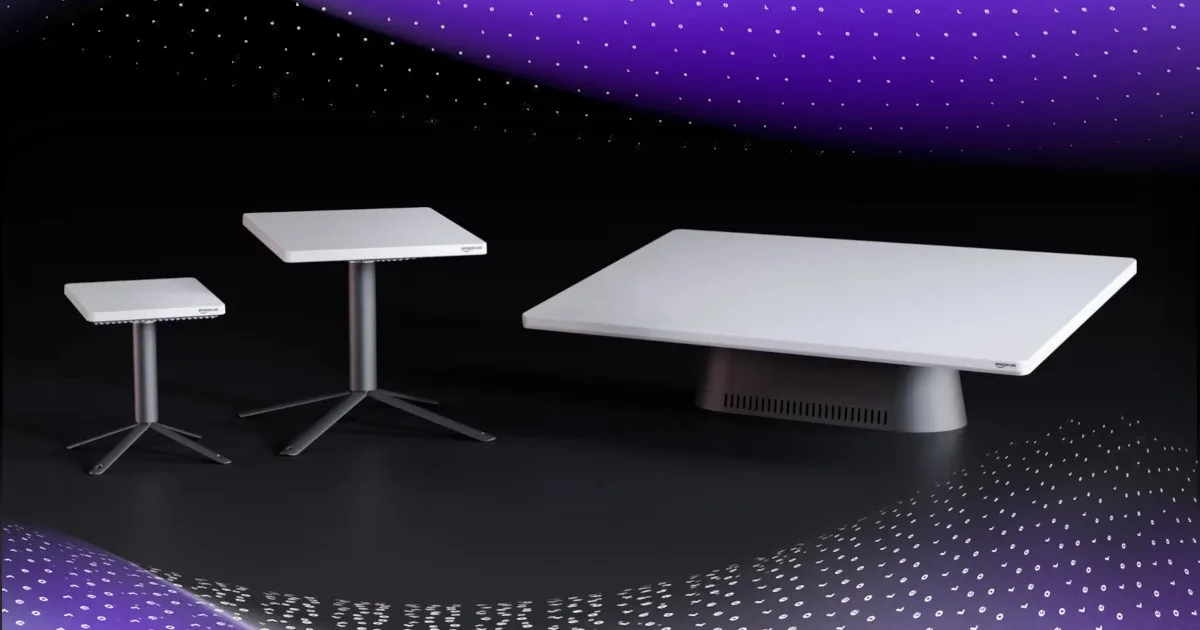
Since its announcement of its upcoming low-Earth orbit (LEO) satellite constellation, Amazon has been hinting at the new technologies it will be introducing to compete with more established players like Starlink . In March 2023, we got our first look at the customer terminals for Amazon Leo (then Project Kuiper).
Amazon is currently planning three different antennas: Nano, Pro, and Ultra. They seem to be all-in-one terminals, incorporating both a modem and router into the antenna itself. It also promises to make these antennas low-cost from launch—something that Starlink struggled with considerably.
If Amazon Leo can come through on its ambitious goals, it could make satellite internet a much more practical option for average internet users. We’re going to walk you through what we know about the home equipment and what potential customers can expect when the service officially launches.
On this page:
Nano | Pro | Ultra | Other equipment | Unanswered questions | Additional resources
On this page:
Amazon Leo Nano
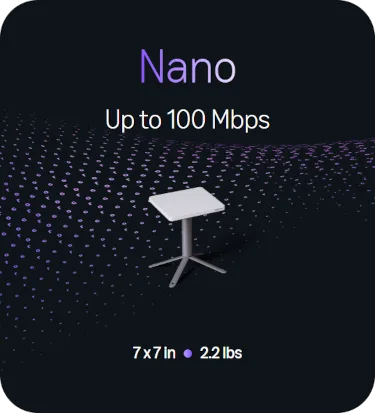
The Amazon Leo Nano is the smallest….The Amazon Leo Nano is the smallest of the three antennas. Its surface measures just 7 x 7 inches and is designed to be portable, weighing just 2.2 pounds. Presumably, it’s intended to compete with the Starlink Mini, which is slightly larger.
The Nano will support speeds up to 100Mbps, which is enough for pretty much any online activity, from checking your email to watching 4K video.
Although promotional images often show the Nano completely freestanding next to a laptop out in a park, we can probably assume that it at least needs a power cable, as the Starlink Mini does, which comes with a standard two-prong cord, but can also use a mini USB-C cable or car adapter.
As for price, we can only speculate based on comparisons to Starlink. The Starlink Mini launched with a price of $599, which was actually $100 more than the standard kit at the time. The price has since come down, with sales and promotions often bringing the price much lower. While beating steep Starlink sale prices is probably optimistic, it’s not unreasonable to expect Amazon’s manufacturing experience to create a device that is considerably cheaper at launch than the standard price for the Starlink Mini.
Amazon Leo Pro
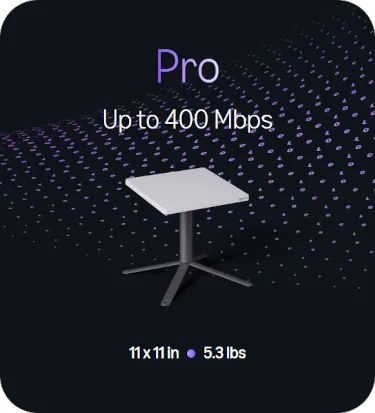
The mid-sized dish in Amazon Leo’s lineup is the Pro. It measures 11 x 11 inches and weighs 5.3 pounds, which is still quite small for a satellite internet antenna. Unlike the Nano, it isn’t marketed as portable, though its size certainly wouldn’t prevent portable use. That would depend more on how the actual plans are designed (as with home 5G vs. mobile 5G).
The Pro antenna is planned to provide speeds up to 400Mbps, which is more than enough for the average household, even if everyone is watching Netflix on separate devices all at the same time. It’s also on par with the top residential speeds offered by Starlink, which means that when deciding between the two, the determining factor might be cost.
As with the Nano, we can only speculate about the price of the Pro antenna. At the start of its open beta program, the basic Starlink dish cost $499, so one would hope that Amazon can beat that right out of the gate. In fact, one of the original goals of Project Kuiper (as Amazon Leo was initially called) was to create a customer terminal that cost less than $500 to build.
With a few years of experience and refinement of its equipment, Starlink equipment now frequently goes on sale, so we might see some intense competition between the two when Leo launches.
Amazon Leo Ultra
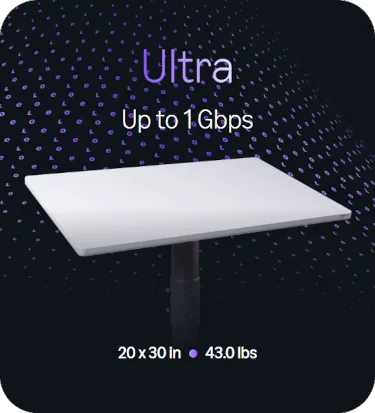
The Amazon Leo Ultra is an enterprise-grade antenna, offering download speeds up to 1Gbps and upload speeds up to 400Mbps, making it perhaps the fastest user antenna ever offered by a satellite internet provider. The Ultra stretches 20 x 30 inches and weighs 43 pounds, making it considerably larger than the other two antennas.
The Ultra antenna is designed to support Amazon Leo’s enterprise features, such as direct connections with Amazon Web Services and private networking between remote facilities. Several companies have already signed agreements with Amazon, and it will be launching an enterprise preview to begin testing the network and gathering feedback before a full rollout.
It’s not clear if the Amazon Leo Ultra will be available for residential customers. Certainly, most households wouldn’t be able to actually make use of all the additional enterprise features, so it probably won’t be the most practical choice. Of course, that didn’t stop individuals from signing up for Starlink’s extra fast Business plan when it was first announced. For those people who want the fastest satellite internet on the planet and don’t care about cost, this is definitely something to watch.
Other upcoming equipment
In addition to these devices that Amazon Leo has officially announced, we’ve also gotten glimpses of some other ways Amazon Leo will connect to users. On April 13, 2026, Amazon Leo unveiled an airplane antenna for providing in-flight Wi-Fi. This antenna offers the same speeds as the Ultra antenna, so it’s reasonable to assume that this is a variation on that design.
Amazon has also made regulatory filings that suggest that it might open up its ecosystem to third-party antennas. The filings mention an “Amazon Leo modem module” that could be installed in an antenna to allow access to the Amazon Leo network. This seems to be geared toward enterprise and government customers that might have more specific requirements than Amazon’s antennas can provide, but this modular system could open up the possibility of a more open system that allows for innovations from outside Amazon itself.
Plenty of unanswered questions
While we’ve gotten a lot of information about Amazon Leo’s technology recently, there are still plenty of questions we don’t yet know the answer to. For example, while the Nano might have a built-in Wi-Fi router similar to the Starlink Mini, that wouldn’t be ideal for an antenna mounted on the roof of your house. Amazon hasn’t given any indication of whether some user terminals will come with a separate router or if users will be able to buy their own router.
We also haven’t seen any mention of in-motion use of residential Amazon Leo equipment along the lines of Starlink Roam. In-motion use falls under different regulations than a connection at a fixed location, and it took Starlink over a year of working with the FCC to get a blanket authorization for Earth Stations in Motion in order to operate satellite terminals on moving vehicles, aircraft, or ships. However, now that Amazon has announced its airplane terminal, we might see more mobile connections in the future.
In any case, the launch of Amazon Leo is going to shake things up for people in rural and underserved areas. We’re going to see a lot more competition and a lot more customer choice. And hopefully, we’ll see a lot more innovative tech announced along the way.
Author - Peter Christiansen
Peter Christiansen writes about telecom policy, communications infrastructure, satellite internet, and rural connectivity for HighSpeedInternet.com. Peter holds a PhD in communication from the University of Utah and has been working in tech for over 15 years as a computer programmer, game developer, filmmaker, and writer. His writing has been praised by outlets like Wired, Digital Humanities Now, and the New Statesman.
Editor - Jessica Brooksby
Jessica loves bringing her passion for the written word and her love of tech into one space at HighSpeedInternet.com. She works with the team’s writers to revise strong, user-focused content so every reader can find the tech that works for them. Jessica has a bachelor’s degree in English from Utah Valley University and seven years of creative and editorial experience. Outside of work, she spends her time gaming, reading, painting, and buying an excessive amount of Legend of Zelda merchandise.
Related Posts