Amazon Leo Satellite Technology
Take a look at the cutting-edge tech that powers Amazon’s new satellite constellation

Apr 17, 2026 | Share 


Technology
When Starlink first launched its low-Earth orbit (LEO) satellite constellation, it fundamentally changed the way we think about satellite internet. Now Amazon is throwing its hat into the satellite internet ring, potentially shaking up the industry yet again.
While the underlying technology of Amazon’s satellite constellation follows the model pioneered by Starlink, Amazon continues to innovate, especially in areas like manufacturing and logistics. This could have a significant impact on many internet users, especially those in rural areas, so we’re going to give you a brief overview of Amazon’s new satellite technology.
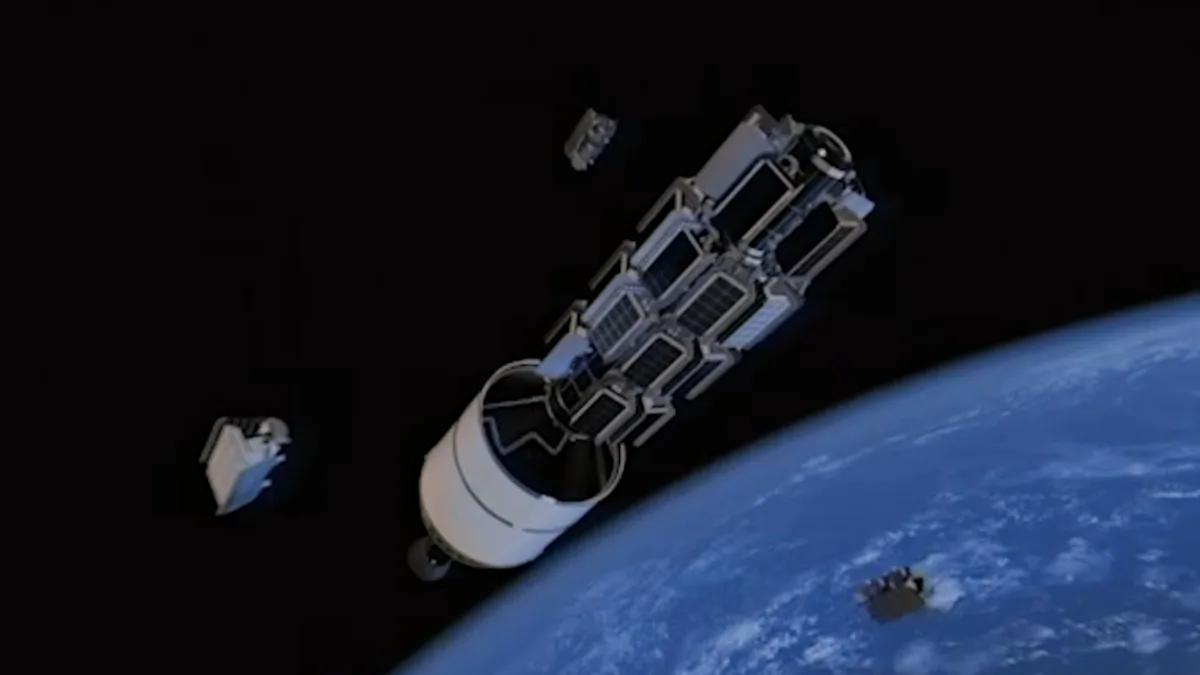
Amazon Leo satellites being deployed. Image courtesy of Amazon.
A fleet of custom satellites
Amazon plans to put more than 3,000 satellites into low-Earth orbit to create its network. LEO satellites have to deal with a lot of technical challenges that traditional satellite networks don’t have to consider. Individual satellites are so close to the Earth that they streak across the sky in a matter of minutes, so in order to maintain a continuous internet connection, another satellite must move into view before the previous one leaves. The satellite also must be able to see a ground station in order to connect to the rest of the internet.
Amazon Leo satellites have a few key technologies to deal with these matters.

Amazon Leo propulsion system test. Image courtesy of Amazon.
Each satellite comes equipped with a tiny ion thruster that uses electricity and krypton propellant to maneuver the satellite. Once deployed, the satellites will operate at an altitude of about 367 to 391 miles. The propulsion system is designed to be extremely efficient, making a single tank of propellant last throughout the satellite’s lifespan.
Although Amazon has already built several ground stations across the globe, the low orbit of the satellites means that they can only see the surface for a few hundred miles in each direction, in contrast to a satellite in a high geosynchronous orbit (GSO), which can see almost half the surface of the Earth at the same time.

Amazon Leo employee working on optical systems. Image courtesy of Amazon.
To get around this issue and also improve network management, Amazon Leo satellites come equipped with an optical inter-satellite link. This allows a satellite to connect to another one nearby, which can then connect to other satellites until it reaches one that’s in range of a ground station. This feature (which newer-generation Starlink satellites also use) will allow Amazon Leo to launch with a much larger coverage area than it would normally be able to support with its current number of ground stations.
Winning through manufacturing and logistics
All the Amazon Leo satellites and other equipment is being created in-house, rather than contracting some parts out to third-party manufacturers. Amazon has years of experience in manufacturing mass market electronics like the Kindle and the Amazon Echo, as well as managing logistics and supply chains on a global scale. While building satellites was definitely a formidable new undertaking, the company certainly wasn’t starting from scratch.
Amazon’s existing manufacturing and distribution system is perhaps its biggest advantage over competitors like Starlink. Despite the demand at launch, Starlink initially struggled to produce enough equipment to maintain user growth. At one point, customers were waiting up to 11 months for their antennas to arrive after signing up.
Although Amazon Leo is launching several years later than Starlink, it’s poised to hit the ground running. If there’s one thing Amazon should be good at, it’s getting customers their equipment in a timely manner. The company’s goal is to create fast and affordable user terminals that can be delivered easily worldwide, just like any other Amazon product.
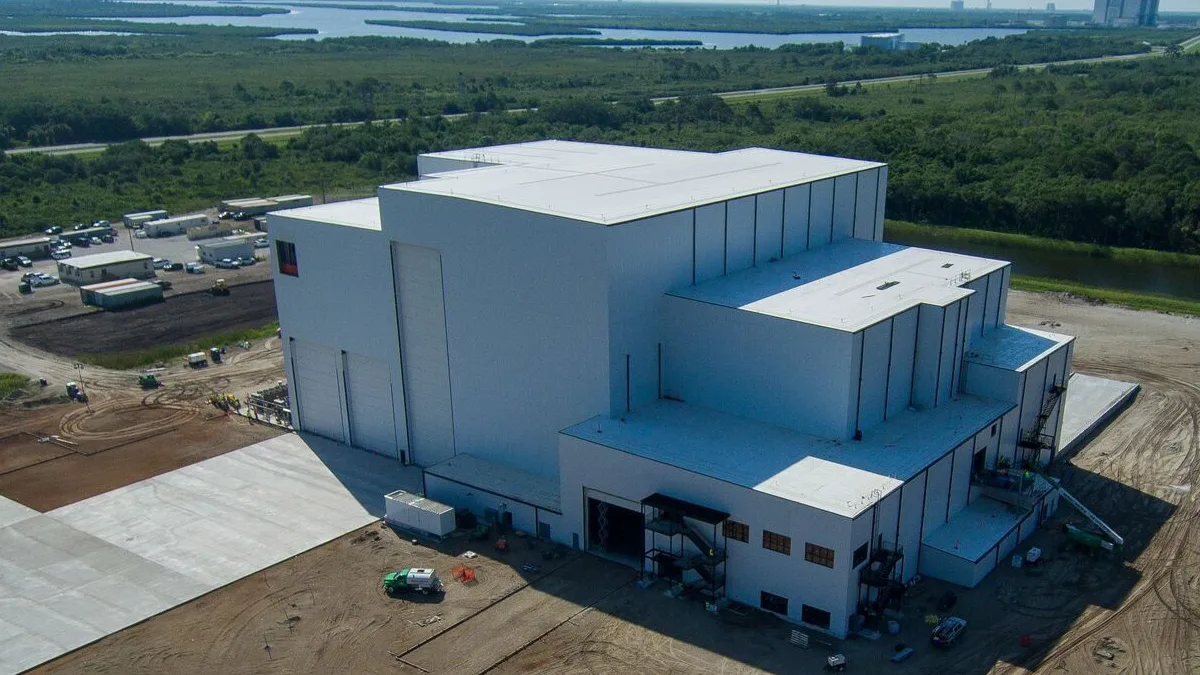
Amazon Leo satellite processing facility in Florida. Image courtesy of Amazon.
Additionally, Amazon has built a giant payload processing facility near the Kennedy Space Center in Florida to prepare satellites for launch. This facility allows Amazon to prepare satellites for multiple launches at the same time, helping to get satellites from the factory to the launch pad as quickly as possible. Amazon later expanded this facility to further accelerate the pace of launches.
Rocket science
One of Starlink’s biggest advantages was its parent company, SpaceX, an aerospace company that makes launch vehicles. This meant that even though it might have struggled in other ways, Starlink never had to worry about getting its satellites into orbit. This was especially fortunate at the time, since other satellite constellations like OneWeb struggled to find launch space after the Russian invasion of Ukraine.
Unfortunately for Amazon, rockets are one thing it doesn’t build. Instead, the company has secured launches from Arianespace, Blue Origin, United Launch Alliance (ULA), and even SpaceX. As the planned launch date for Amazon Leo draws near, Amazon is continuing to accelerate the pace of satellite production and launches.
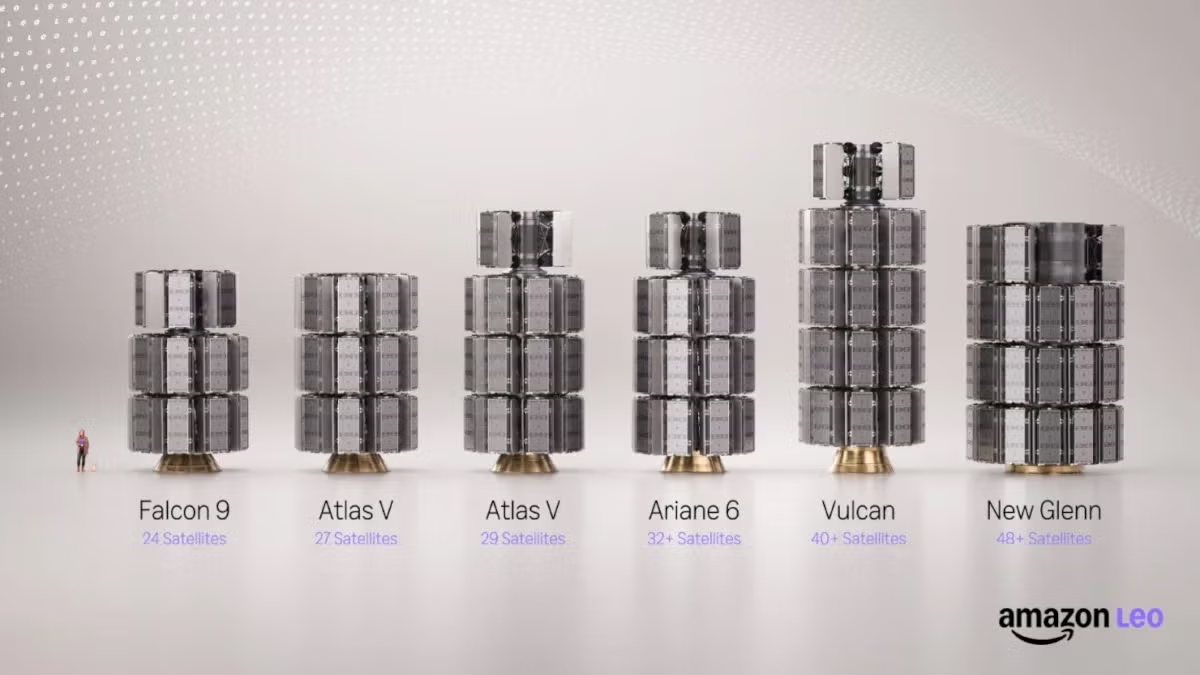
Amazon Leo satellite payloads for various rockets. Image courtesy of Amazon.
In addition to investing in launch infrastructure, Amazon is also packing more satellites into each launch. Most of the launches in 2026 will be on new heavy-lift rockets such as the ULA Vulcan Centaur and the Blue Origin New Glenn, which can carry payloads with dozens of satellites. Amazon engineers have also focused their attention on redesigning their payloads to make space for additional satellites. The company also anticipates that the payload size will continue to increase as Blue Origin and ULA improve the performance of their launch vehicles.
A new space race
On April 14, 2026, Amazon announced that it was acquiring Globalstar, another satellite company. This gives Amazon access to Globalstar’s fleet of about 24 satellites, which has previously provided services like satellite tracking devices and two-way satellite messaging (useful tech for a delivery company).
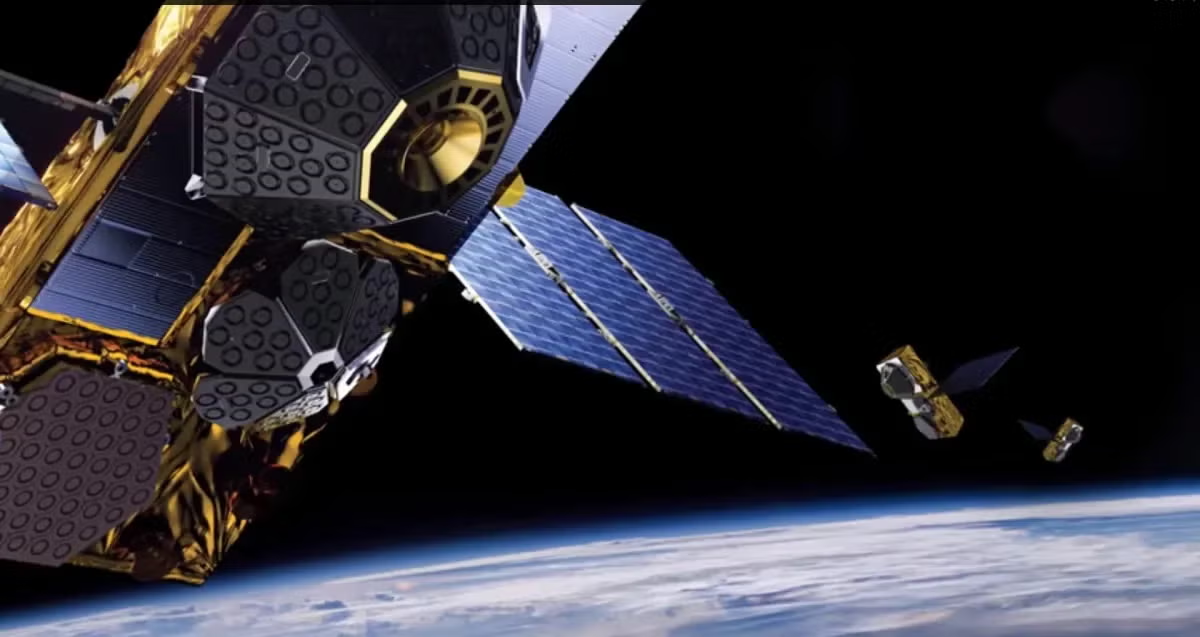
Globalstar satellite constellation. Image courtesy of Globalstar.
More importantly, Amazon now has access to the bands of the electromagnetic spectrum that were licensed to Globalstar. With this new range of spectrum under its control, Amazon has now announced a partnership with Apple to deploy direct-to-device (D2D) services for devices like the iPhone and Apple Watch. These features include the ability for users to text emergency services, share their location, or request roadside assistance in areas where they wouldn’t normally have cellphone service.
Since the airwaves belong to all of us, licenses to use specific frequencies are incredibly valuable commodities. As such, telecom companies are forever trying to outbid each other for these licenses in order to increase the bandwidth of their services so that they can offer greater speeds to a larger number of customers.
By acquiring Globalstar and its licenses, Amazon can bypass the regulatory hurdles and challenges from competitors it would normally face when trying to gain additional spectrum frequencies. This gives Amazon another helpful boost as it tries to catch up to Starlink, which has launched similar services in partnership with T-Mobile.
What does this mean for satellite customers?
The biggest impact of all the new technologies being developed by Amazon will be on people who live in areas that are underserved when it comes to internet access. As Amazon has frequently emphasized, the goal of Amazon Leo is to bring high-speed internet access to people who need it and to help bridge the digital divide. Internet access means access to modern communications, education, health care, and many other services. It also makes it possible to order products from online shopping sites like Amazon (a detail that surely had some influence on the project).
While Starlink already upended the satellite internet market when it launched just a few years ago, the entry of Amazon will offer some much-needed competition. Rural internet users will have a choice of viable internet providers, and both providers will have pressure to offer lower prices and better service to their customers. Hopefully, this will ensure that the current wave of innovation in satellite internet will continue and that people around the world will get the benefits that Amazon Leo has been promising.
Author - Peter Christiansen
Peter Christiansen writes about telecom policy, communications infrastructure, satellite internet, and rural connectivity for HighSpeedInternet.com. Peter holds a PhD in communication from the University of Utah and has been working in tech for over 15 years as a computer programmer, game developer, filmmaker, and writer. His writing has been praised by outlets like Wired, Digital Humanities Now, and the New Statesman.
Editor - Jessica Brooksby
Jessica loves bringing her passion for the written word and her love of tech into one space at HighSpeedInternet.com. She works with the team’s writers to revise strong, user-focused content so every reader can find the tech that works for them. Jessica has a bachelor’s degree in English from Utah Valley University and seven years of creative and editorial experience. Outside of work, she spends her time gaming, reading, painting, and buying an excessive amount of Legend of Zelda merchandise.
Related Posts